
Foundations of Drug Discovery: Principles, Process, and Translation
About Course
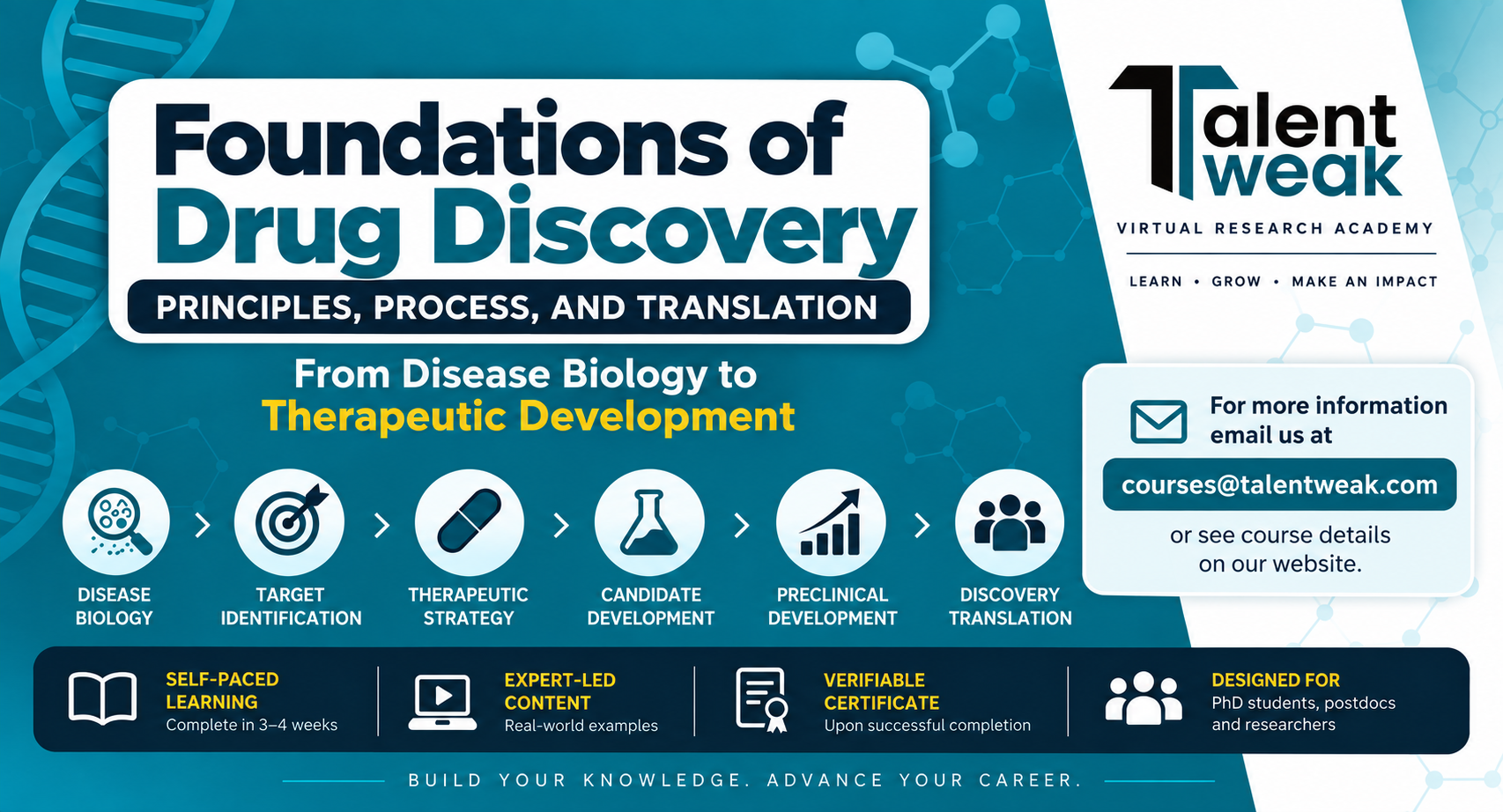
Foundations of Drug Discovery: Principles, Process, and Translation is a comprehensive, self-paced course designed to build a practical understanding of how modern drug discovery works—from disease biology and therapeutic hypotheses to drug targets, therapeutic modalities, candidate discovery, and translation toward preclinical and clinical development.
Designed for PhD students, postdoctoral researchers, graduate students, academic scientists, and professionals interested in biotechnology and pharmaceutical drug discovery, this course connects core scientific principles with the real-world drug discovery process.
Through six structured modules, you will explore:
- The modern drug discovery and development landscape
- Disease biology, unmet medical need, and therapeutic hypotheses
- Target identification, validation, and assessment
- Therapeutic strategies and modality selection
- Hit identification, lead optimization, DMPK, PK/PD, and preclinical pharmacology
- Candidate selection and translation toward preclinical and clinical development
Real-world examples, published research, scientific case studies, quizzes, and curated learning materials are integrated throughout the course.
By the end of the course, you will understand the major stages, terminology, scientific functions, and decision-making principles of modern drug discovery and how promising science progresses from biological rationale toward a potential medicine.
Course Content
Drug Discovery and Development: Landscape, Stages, and Functions
-
Drug Discovery and Development: Definitions and Overall Process
-
Stages of the Drug Discovery and Development Pipeline
-
Scientific Functions and the Drug Discovery Ecosystem
-
Drug Discovery Attrition and Major Causes of Program Failure